

Creating a home workspace that feels both calming and productive can transform the way you work and help maintain a healthy work-life balance. Whether you’re working remotely full-time, freelancing, or simply need a dedicated area for occasional tasks, setting up the right environment is essential for staying focused and reducing stress.
In this post, we’ll explore practical tips on how to design a workspace that supports your productivity and promotes a sense of calm.
Why Your Workspace Matters
Your environment greatly influences your mood, energy, and efficiency. A cluttered or uncomfortable space can lead to distractions and frustration, while a well-organised, visually pleasing area encourages concentration and creativity. Investing some time to create a workspace that suits your needs helps you feel more motivated and reduces the temptation to procrastinate.
Choosing the Right Location
Pick a Quiet Spot
Find a location that minimises interruptions and background noise. A quiet corner of a room, a spare bedroom, or an unused dining area can serve as an effective workspace. If this isn’t possible, noise-cancelling headphones are a helpful alternative.
Consider Natural Light
Natural light enhances mood and reduces eye strain. Position your desk near a window if you can, but be mindful of glare on screens. If natural light is limited, invest in good quality, adjustable lighting to keep your space well-lit.
Invest in Comfortable Furniture
Supportive Chair
An ergonomic chair with good lumbar support is crucial. Sitting comfortably helps prevent back pain and fatigue during long work sessions.
Functional Desk
Choose a desk with enough surface area for your computer, paperwork, and other essentials. Adjustable-height desks can allow you to alternate between sitting and standing, which is beneficial for your posture and circulation.
Organise for Efficiency
Keep it Tidy
A neat workspace helps keep your mind clear. Use storage solutions like shelves, drawers, and organisers to keep clutter off your desk.
Use Cable Management
Messy cables can be distracting and make cleaning difficult. Use clips, sleeves, or under-desk trays to keep wires organised and out of sight.
Personalise Your Space
Add Soothing Elements
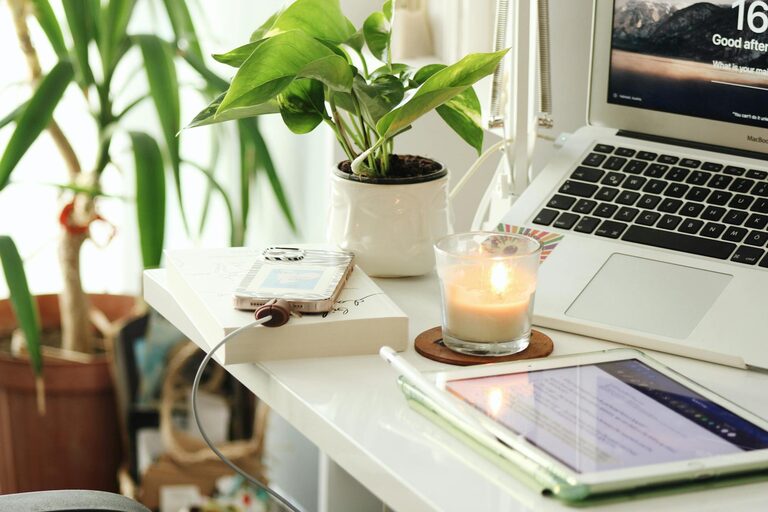
Plants, soft textiles, or calming colours can make your workspace more inviting and less sterile. Choose colours like muted blues, greens, or earth tones, which tend to create a relaxing atmosphere.
Keep Motivational Items
Incorporate a few personal or motivational items such as a favourite photo, a small piece of art, or an inspiring quote. These can boost your mood without causing distraction.
Minimise Distractions
Designate Work Hours
Setting clear boundaries around your work hours helps keep your mind focused on tasks and reduces the temptation to check non-work-related things constantly.
Limit Electronic Interruptions
Turn off non-essential notifications on your devices. Use apps or browser extensions that block distracting websites if necessary.
Take Breaks and Move
Schedule Short Breaks
Regular breaks improve concentration and prevent burnout. Use a timer or app to remind yourself to stand, stretch, or walk around every 45-60 minutes.
Incorporate Movement
If space allows, include some light exercise equipment like a yoga mat or resistance bands. Movement refreshes the mind and body and supports overall wellbeing.
Maintain Good Air Quality and Temperature
Ventilate Your Space
Fresh air supports alertness and reduces fatigue. Open windows or use air purifiers to keep the air fresh.
Adjust the Temperature
Ensure your workspace is neither too hot nor too cold. Comfortable temperature settings help maintain focus throughout the day.
Use Technology Wisely
Invest in Quality Equipment
Reliable technology reduces frustration. Invest in a good quality keyboard, mouse, monitor, and headset to improve comfort and efficiency.
Backup Your Work
Regularly save and back up your files using cloud services or external drives. This reduces stress related to potential data loss.
Conclusion
Crafting a calming and productive home workspace isn’t about perfection but creating a space that supports how you work best. By choosing the right location, investing in comfortable furniture, organising efficiently, and adding personal touches, you can enjoy a more focused, enjoyable, and healthier workday. Remember to regularly reassess your setup and make adjustments based on your evolving needs. A workspace designed with both calm and productivity in mind is a key to achieving your best work from home.